
Teaching as Meaning-Making: A Psychological Autoethnography of Blackout and Co-Created Art in Education
DOI:
https://doi.org/10.37119/ojs2026.v31i1.935Abstract
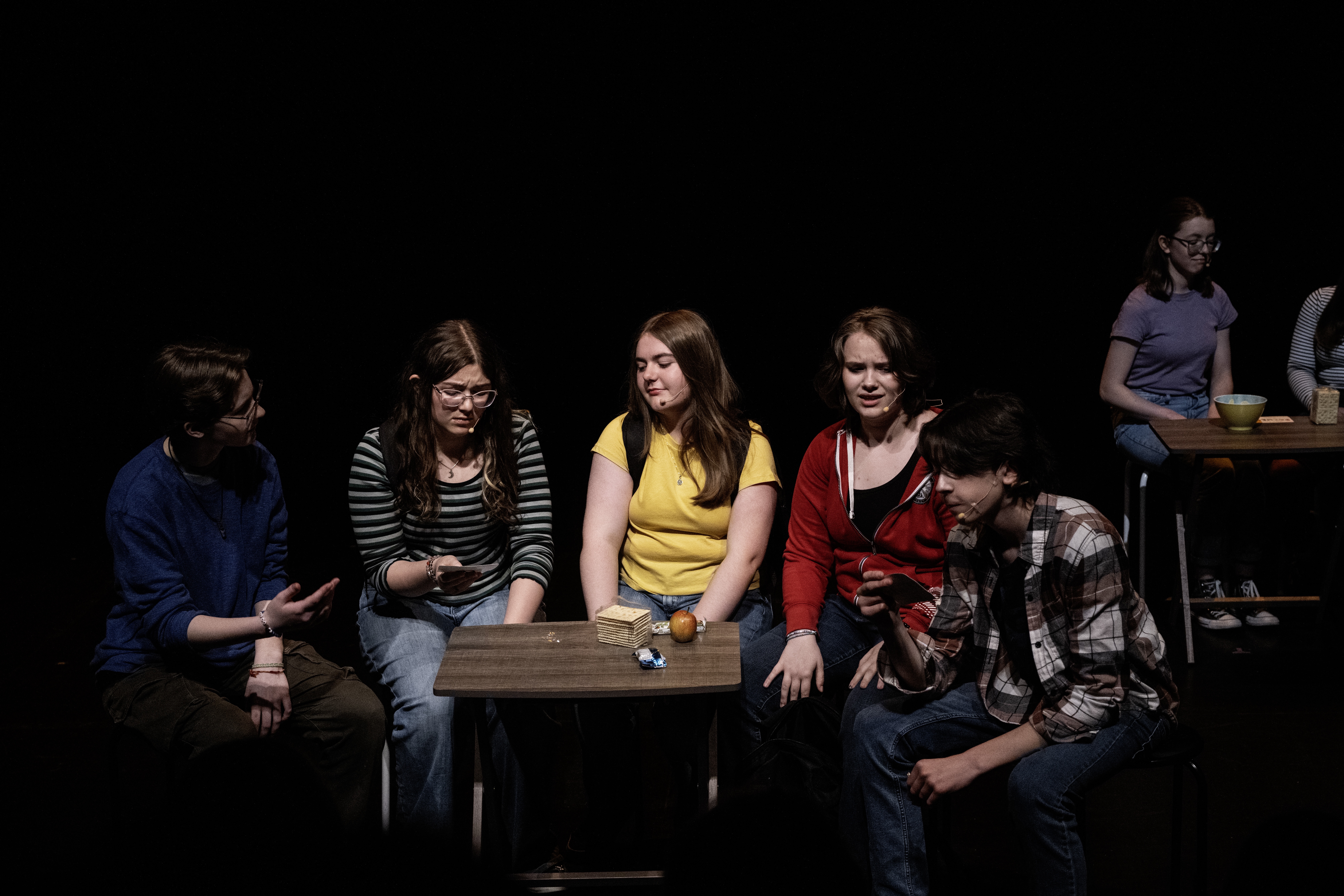
Using autoethnographic and performance ethnographic methods, I trace my experiences as a public educator and as a member of the ECHO Lab, the research collective that is involved in the co-creation of Blackout. Blackout is a youth co-created musical theatre rooted in the personal experiences of 2SLGBTQIA+ students who protested Pride celebrations in their schools. Drawing on narrative, existential and critical psychological frameworks, I show how stories (my own and those represented in Blackout) are central to meaning-making in educational settings. Through personal vignettes, I illustrate how meaning emerges through relational experiences, authentic engagement, and values-driven action. I position Blackout as both a methodology and a psychological intervention that enables students and teachers to co-create meaningful expressions of identity and collective responses to shared problems. Ultimately, I argue that critical, co-created art expands the possibilities for collective affirmation among educators and neuroqueer students.
Keywords: 2SLGBTQIA+, neuroqueer, arts-based education, autoethnography
Published
Issue
Section
License
Copyright (c) 2026 Stefan James

This work is licensed under a Creative Commons Attribution-NonCommercial-NoDerivatives 3.0 Unported License.
Authors who publish with this journal agree to the following terms:- Authors retain copyright and grant the journal right of first publication with the work simultaneously licensed under a Creative Commons Attribution License that allows others to share the work with an acknowledgement of the work's authorship and initial publication in this journal.
- Authors are able to enter into separate, additional contractual arrangements for the non-exclusive distribution of the journal's published version of the work (e.g., post it to an institutional repository or publish it in a book), with an acknowledgement of its initial publication in this journal.
- Authors are permitted and encouraged to post their work online (e.g., in institutional repositories or on their website) prior to and during the submission process, as it can lead to productive exchanges, as well as earlier and greater citation of published work (See The Effect of Open Access).