Low-Cost, Community-Driven Pedagogy and Canadian SSI Education: A Cross-Cultural Analysis
DOI:
https://doi.org/10.37119/ojs2026.v31i3.972Abstract
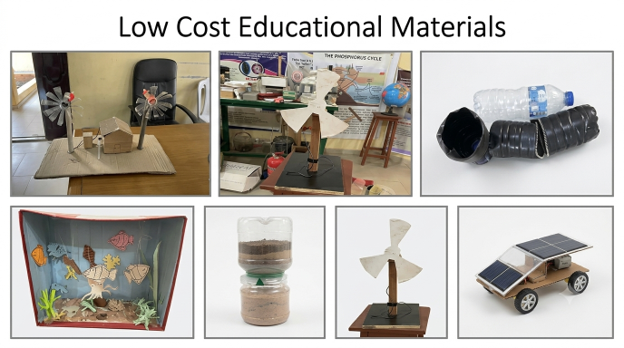
Socioscientific issues (SSI) in education help develop citizens capable of engaging with complex science-society challenges; yet from literature reviewed by the researchers, some Canadian teachers face persistent barriers in implementing SSI education in underserved settings. This paper examines how a low-cost, community-driven approach to teaching waste recycling to Nigerian pre-service teachers that was developed by the authors, might inform SSI pedagogy in Canadian rural, francophone, and Indigenous contexts. Our argument is built upon a review of selected Canadian SSI education literature (2010-2024) and a cross-cultural case analysis to discuss the transferability of the approach and its implications for advancing equity in selected education contexts in Canada.
Keywords: socioscientific issues, community-driven pedagogy, teacher education, Canadian science education, equity in education
Published
Issue
Section
License
Copyright (c) 2026 Norris Erhabor, Giuliano Reis

This work is licensed under a Creative Commons Attribution-NonCommercial-NoDerivatives 3.0 Unported License.
Authors who publish with this journal agree to the following terms:- Authors retain copyright and grant the journal right of first publication with the work simultaneously licensed under a Creative Commons Attribution License that allows others to share the work with an acknowledgement of the work's authorship and initial publication in this journal.
- Authors are able to enter into separate, additional contractual arrangements for the non-exclusive distribution of the journal's published version of the work (e.g., post it to an institutional repository or publish it in a book), with an acknowledgement of its initial publication in this journal.
- Authors are permitted and encouraged to post their work online (e.g., in institutional repositories or on their website) prior to and during the submission process, as it can lead to productive exchanges, as well as earlier and greater citation of published work (See The Effect of Open Access).