
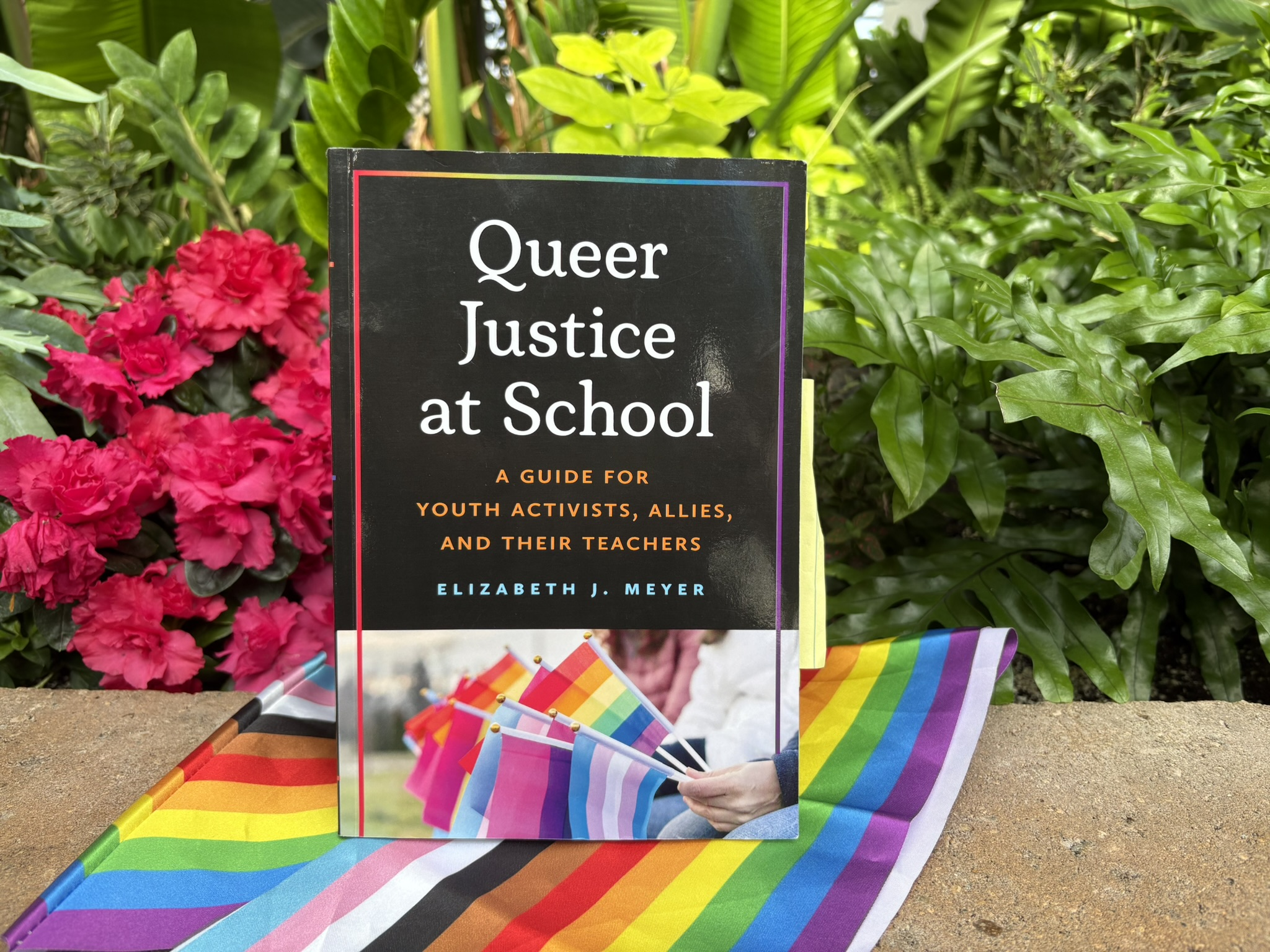
A Review of Elizabeth J. Meyer’s (2025) Queer Justice at School: A Guide for Youth Activists, Allies, and Their Teachers
DOI:
https://doi.org/10.37119/ojs2025.v30i3.962Abstract
This review of Queer Justice in Schools highlights the urgency of queer justice work at a time when schools across North America face growing hostility toward queer youth and educators. In Queer Justice, Elizabeth J. Meyer bridges theory and practice, offering both conceptual grounding and tangible strategies for educators and allies committed to creating affirming spaces. By centering queer joy rather than risk, Meyer provides a hopeful and actionable framework for advocacy and activism in education.
As a justice-oriented master’s student and sessional instructor at the University of Regina, my work involves deconstructing existing educational systems and imagining what they could become if built through care, equity, and liberation. Meyer’s text supports this vision by offering practical tools that educators can apply today while calling for systemic change. In a climate where queer inclusion remains under attack, her work reminds readers that transformation is possible and urgently necessary.
Published
Issue
Section
License
Copyright (c) 2025 Jaclyn Roach

This work is licensed under a Creative Commons Attribution-NonCommercial-NoDerivatives 3.0 Unported License.
Authors who publish with this journal agree to the following terms:- Authors retain copyright and grant the journal right of first publication with the work simultaneously licensed under a Creative Commons Attribution License that allows others to share the work with an acknowledgement of the work's authorship and initial publication in this journal.
- Authors are able to enter into separate, additional contractual arrangements for the non-exclusive distribution of the journal's published version of the work (e.g., post it to an institutional repository or publish it in a book), with an acknowledgement of its initial publication in this journal.
- Authors are permitted and encouraged to post their work online (e.g., in institutional repositories or on their website) prior to and during the submission process, as it can lead to productive exchanges, as well as earlier and greater citation of published work (See The Effect of Open Access).